
"Nestlé training"
60 article(s) found

Pu'er is the main coffee producing area in China. Nestl é coffee via Starbucks, Wang Zhongxue, Nestl é and Chinese enterprises.
Generally speaking, the fruit of the first wave is not very good. The best is the second and third waves, and the best is the fruit of the fourth wave. Wang Zhongxue is afraid that others will not understand, and constantly emphasizes the fullness of coffee beans. Because it determines the thickness of the money he put into his pocket from Nestle. Wang Zhongxue, an authentic Pu'er farmer in Yunnan, now specializes in growing coffee. Nestl é does not operate on a global scale.

Chinese Coffee Bean Market Nestle Coffee Center stationed in Pu'er Industrial Park
After nearly 30 years of deep cultivation of Pu'er, the large-scale project of Nestle Coffee Center has recently officially entered the Pu'er Industrial Park. The center will greatly enhance its ability to provide training and technical support to farmers and coffee practitioners, and further improve and promote the development of Pu'er coffee industry. Representatives of Pu'er Industrial Park and Nestle Company jointly signed a cooperation agreement in Pu'er. Nestl é's pioneering role in Yunnan
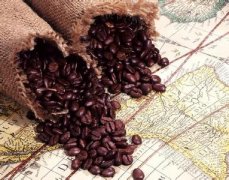
Nestl é sets up the world's first coffee center in Pu'er, Yunnan Province
Nestl é, the world's first coffee center, announced on the 12th that it was officially stationed in the Pu'er Industrial Park in Yunnan Province. According to Shi Mingde, executive vice president of Nestl é Greater China, the Nestle Coffee Center consists of two parts, one is the Nestle Coffee planting training Center, which will provide training for farmers, agronomists and coffee professionals; the other part is the modern coffee quality assurance laboratory and integrated processing and warehousing.
Nestl é supports Yunnan coffee industry and promotes its development.
Following Cafe Review (Wechat official account vdailycom) found that Beautiful Cafe opened a small shop of its own from the late 1980s to the present. Thanks to the efforts of Nestle to explore and cultivate, the industry finally realized the charm of Yunnan coffee for the first time in 2003. The word Yunnan coffee appeared for the first time in the futures exchange of the United States. Explore Yunnan Coffee as the first planting of Yunnan Coffee beans

Using Coffee planting to help get rid of Poverty and build a Sustainable Industrial Model
Nestl é bought only 80 tons of qualified coffee beans in Yunnan, but this year, it is expected to acquire more than 13900 tons of qualified coffee beans. With the help of Nestl é, the scale of Yunnan coffee industry has become the 11th coffee bean producing area in the world. Since 2010, Nestl é has helped local coffee farmers upgrade their coffee varieties from Yunnan's traditional small-grain coffee to the introduction of South America.

Nestl é won the golden prize in China's food industry in 2018 to build capsule coffee production in Switzerland.
Professional coffee knowledge exchange more coffee bean information please follow the coffee workshop (Wechat official account cafe_style) November 20, 2018, sponsored by Xinhuanet Food Industry 2018 China Food Development Conference was held in Beijing. The theme of this conference is brand leading change and creating reshaping value, which was officially announced at the 2018 China Food Industry Golden Award. Because Nestle is in China

Nestle Coffee Program (Development of Coffee Industry in Pu'er, Yunnan)
The purpose of Nestl é in helping Yunnan to develop coffee bean production is to ensure that the company can purchase high quality coffee beans for Nestle coffee production. Now, Nestl é has become a stable, reliable and fair buyer of Yunnan coffee beans, helping to achieve economic prosperity in Pu'er area of Yunnan Province. Yunnan has an ideal climate for coffee cultivation. Nestle has been committed to
Nestl é purchases 4C certified Yunnan coffee beans
After several years of training and preparation, since the beginning of the 2014-15 procurement season, all coffee beans purchased by Nestl é in Yunnan have passed 4C certification. 4C is a widely accepted management rule in the world, which involves the sustainable development of all aspects of the supply chain, such as coffee cultivation, production, processing and marketing. More and more international coffee buyers require that the coffee they buy must meet the requirements of 4C or
Nestl é invests 100 million in Yunnan Pu'er to build Coffee Bean Center
Food giant Nestl é made another big move in its coffee bean business in China shortly after Xuanyu adjusted its frost business. A few days ago, Nestl é announced that it will invest in the coffee bean industry in Pu'er City, Yunnan Province, provide training and infrastructure for local farmers through a large-scale project of Nestle Coffee Center, and enhance the brand influence of Pu'er coffee. Earlier, Nestl é said it would start selecting 100% Popularization in 2013.
Nestle Coffee plans Yunnan Pu'er Coffee Industry Development how about coffee beans in Yunnan?
Nestle Coffee Plan after more than 20 years of painstaking efforts, Nestle's coffee planting activities in Yunnan have had a profound impact on the economy of the region. Yunnan Pu'er has gradually developed into a coffee bean producing area with high output, high quality and has attracted the attention of the global coffee industry. The purpose of Nestl é in helping Yunnan to develop coffee bean production is to ensure that the public
Nestle Coffee Project? Development of Yunnan Pu'er Coffee Industry?
Professional coffee knowledge exchange more coffee bean information Please follow the coffee workshop (Wechat official account cafe_style) after more than 20 years of hard work, Nestle's coffee planting activities in Yunnan have had a profound impact on the region's economy. Yunnan Pu'er has gradually developed into a coffee bean producing area with high output, high quality and has attracted the attention of the global coffee industry. Nestle Corp.
Expand the market demand of coffee beans in Yunnan
A few days ago, Nestl é announced that it would invest in the coffee industry in Pu'er City, Yunnan Province, provide training and infrastructure for local farmers through a large-scale Nestle Coffee Center project, and enhance the brand influence of Pu'er coffee.

Taiwan media: "Pu'er Coffee" sweeps mainland international brands to go to Yunnan to "grab beans"
Well-known international coffee brands Nestl é, Starbucks and Shangdao Coffee all use Chinese-made Yunnan coffee beans, according to Taiwanese media. Among them, more than 60% of the coffee beans produced in Yunnan each year supply Nestl é, but Starbucks did not fall behind when it launched the first coffee beans from a single producing area in Yunnan at the beginning of this year. Yunnan is also Starbucks' first coffee grower support center in Asia.

Human Resource Management of Nestle Company operated by Cafe
Nestl é, founded in 1867, is the largest food company in the world, ranking among the top 50 in the world, and its scale is so large that it is impossible to accurately count the type and quantity of its products. 8500 kinds of food, beverage and medical products all use the Nestl é brand, coupled with a variety of different packaging, specifications, Nestle products have more than 22000 kinds. The reason why Nestle
Nestl é supports Yunnan Coffee Industry
Following Cafe (official Wechat account vdailycom) found that Beautiful Cafe has opened a small shop of its own. In recent years, research by Nestl é France Tourre Research Center has found that low productivity, disease incidence and global warming are threatening global coffee bean production and will reduce suitable planting area in most coffee producing areas in the next few years. Therefore, the Tourre Research and Development Center believes that for the coffee industry,
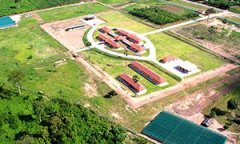
Nestl é spends $400m on Ivory Coast (C ô te d'Ivoire) to build coffee planting base
Nestl Nestl é has invested in a coffee and cocoa planting base in Ivory Coast C ô te d'Ivoire (Africa), as well as a supporting training center, covering a total area of 30 hectares. Nestl é says coffee tree farms will provide 27 million coffee plants by 2020, which will help rebuild the coffee market in the West African country.

Nestl é expands the scale of purchasing coffee beans in China and is optimistic about the Chinese market.
Yunnan Pu'er is an important planting base of Nestle Coffee, and the settlement of Nestle Coffee Center seems reasonable. Statistics show that there are about 123000 farmers in Yunnan, planting an area of about 124000 hectares of coffee, while the annual output of raw coffee beans is 70, 000 to 100000 tons. The Nestle Coffee Center, completed on March 23 in Pu'er City, covers an area of 30,000 square meters. According to the project planning, the central planning

Coffee planting base how many countries in the world are growing coffee
After several years of training and preparation, all coffee beans purchased by Nestl é in Yunnan have passed 4C certification since the beginning of the 2014-2015 procurement season. At the Nestle Coffee Purchasing Station, Mr. Huth proudly introduced this year's coffee purchase to the reporter. It is reported that 4C is committed to coffee cultivation, primary processing and trade.
Nestle Foundation seeks high quality coffee
Following the 4C(Common Code for the Coffee Community) free training for Yunnan coffee farmers and coffee company staff in July last year, up to now, Nestle coffee expert group in Yunnan has provided free training for nearly 1800 coffee practitioners in Yunnan, and distributed 4C manuals, 4C units and verified pesticide lists and Nestle.
Only "4C" beans are selected when purchasing coffee beans in Yunnan.
Coffee is one of the most popular drinks in the world today, with global consumption of more than 1.5 billion cups a day. Today, Nestle Coffee is almost synonymous with coffee because the world consumes 4600 cups of Nestle coffee per second. In order to meet consumer demand, Nestl é has set up 26 Nestle coffee production plants around the world, two of which are located in China. After several years of training and preparation, since